200+ peer-reviewed publications
15 years in research methodology
200+ peer-reviewed publications
15 years in research methodology
©
Since — 2022

Doctor Raza is a physician-researcher consultancy serving clinicians whose data, evidence, or stalled manuscripts deserve the peer-reviewed record. We take systematic reviews, meta-analyses, and original research from protocol to indexed publication — with the methodological standards that let your work withstand peer review.
©
Since — 2022
Doctor Raza is a physician-researcher consultancy serving clinicians whose data, evidence, or stalled manuscripts deserve the peer-reviewed record. We take systematic reviews, meta-analyses, and original research from protocol to indexed publication — with the methodological standards that let your work withstand peer review.
[01]
Our Approach
Traditional consultants perfected the art of the promise. We perfected the art of the paper. When your career depends on getting published, you need a different kind of partner.
Physician-researcher with 15 years in medical research and 200+ peer-reviewed publications. Dr. Raza personally leads every engagement, from protocol design and statistical analysis to final journal submission.
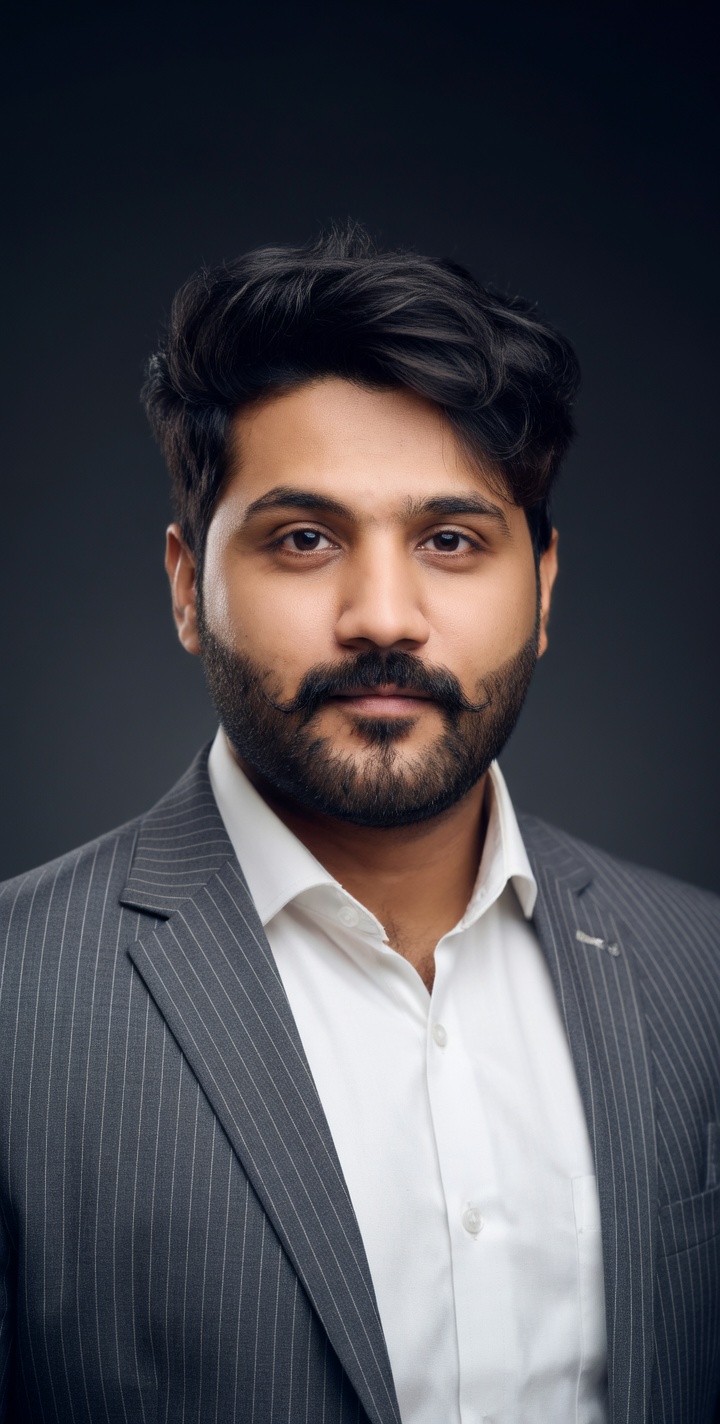
Dr. Shakir Raza
Founder & Lead Researcher
"Doctor Raza is built around a single commitment: every manuscript that leaves our desk has been led, from first protocol to final submission, by a physician-researcher. Not a junior. Not an outsourced analyst. Not a committee of hands that never see the final draft."
"Doctor Raza is built around a single commitment: every manuscript that leaves our desk has been led, from first protocol to final submission, by a physician-researcher. Not a junior. Not an outsourced analyst. Not a committee of hands that never see the final draft."
"Dr. Shakir Raza oversees every engagement personally. Methodology is designed, statistical analysis is conducted, and the manuscript is written by someone who has been inside peer review from both sides of the editorial desk for fifteen years. That is why our submissions read like they were written for the journal — because they were."
"We work by referral, with a limited number of clinicians each quarter. If your data is waiting, if your manuscript is stalled, if your systematic review has never left the protocol stage — that is the situation we were built for."
[02]
Why choose us
We deliver more than manuscripts. We deliver careers.
Strong research accelerates everything. It earns promotions, secures fellowships, unlocks funding, and builds reputations that compound over time. We're not just writing papers — we're creating the academic currency that moves your career forward.
2022
2023
2024
2025
2026
+
Papers published across Scopus and PubMed-indexed journals
x
Faster than typical academic timelines.
+
Countries served — from Saudi Arabia to the UK.

%
First-submission acceptance rate.

Fast to publish. Built to last.
Speed without shortcuts
We deliver finished manuscripts in weeks, not months. Our streamlined process eliminates the typical back-and-forth while maintaining the methodological rigor that gets papers accepted.
Flexible engagement
Single manuscripts, multi-paper research programs, or ongoing statistical support. Every project is scoped to your specific needs. Scale up as your research agenda grows.
[03]
Services
Services
End-to-end research capabilities under one roof. Whether you need a complete systematic review or help getting an abandoned draft across the finish line, we have the expertise to deliver. No outsourcing, no excuses — just rigorous work from a senior research team.
[01]
Systematic Reviews & Meta-Analyses
A systematic review done correctly is the most enduring contribution a clinician can make to their field. Done incorrectly — with a rushed search strategy, unreported heterogeneity, or a forest plot that cannot survive a careful reader — it wastes months and embeds weak evidence into the literature.
We conduct systematic reviews and meta-analyses to Cochrane Handbook and PRISMA 2020 standards. Protocol registration on PROSPERO; reproducible search strategies across PubMed, Embase, Cochrane CENTRAL, Web of Science, and Scopus; dual-reviewer screening on Rayyan or Covidence; risk-of-bias assessment with RoB 2.0 or Newcastle-Ottawa; GRADE certainty ratings; random-effects or fixed-effects meta-analysis with full heterogeneity, sensitivity, and subgroup analysis; network meta-analysis with SUCRA rankings where the question warrants; and a manuscript written to the conventions of your target journal.
Typical engagement: eight to twelve weeks from protocol to submission-ready draft.
[01]
Systematic Reviews & Meta-Analyses
A systematic review done correctly is the most enduring contribution a clinician can make to their field. Done incorrectly — with a rushed search strategy, unreported heterogeneity, or a forest plot that cannot survive a careful reader — it wastes months and embeds weak evidence into the literature.
We conduct systematic reviews and meta-analyses to Cochrane Handbook and PRISMA 2020 standards. Protocol registration on PROSPERO; reproducible search strategies across PubMed, Embase, Cochrane CENTRAL, Web of Science, and Scopus; dual-reviewer screening on Rayyan or Covidence; risk-of-bias assessment with RoB 2.0 or Newcastle-Ottawa; GRADE certainty ratings; random-effects or fixed-effects meta-analysis with full heterogeneity, sensitivity, and subgroup analysis; network meta-analysis with SUCRA rankings where the question warrants; and a manuscript written to the conventions of your target journal.
Typical engagement: eight to twelve weeks from protocol to submission-ready draft.
[02]
Original Research Manuscripts
Most stalled manuscripts are not failed manuscripts. They are datasets waiting for someone with both clinical fluency and methodological depth to recognize what is publishable inside them.
We take raw clinical data — whether from your own practice, a retrospective chart review, a knowledge-attitudes-practices survey, or an institutional database — and produce a complete, submission-ready manuscript. Study-design selection, formal statistical analysis plan, descriptive and inferential statistics, regression or multivariate modeling where the question demands it, publication-quality tables and figures, full manuscript write-up, target-journal selection, formatting, and submission.
Typical engagement: sixty to ninety days from dataset to submission
[02]
Original Research Manuscripts
Most stalled manuscripts are not failed manuscripts. They are datasets waiting for someone with both clinical fluency and methodological depth to recognize what is publishable inside them.
We take raw clinical data — whether from your own practice, a retrospective chart review, a knowledge-attitudes-practices survey, or an institutional database — and produce a complete, submission-ready manuscript. Study-design selection, formal statistical analysis plan, descriptive and inferential statistics, regression or multivariate modeling where the question demands it, publication-quality tables and figures, full manuscript write-up, target-journal selection, formatting, and submission.
Typical engagement: sixty to ninety days from dataset to submission
[03]
Statistical Analysis & Data Science
Statistical flaws are the most common reason manuscripts are rejected — and the easiest for an experienced reviewer to identify. For authors who have their own manuscript in progress but need the statistics done, or redone, to journal-grade standard, we provide analysis as a standalone service.
Work is conducted in SPSS, R, Stata, or Python, with full reproducibility: annotated output, a methods section written to the conventions of your target journal, a results narrative ready to integrate into your draft, and all code or syntax shared on delivery.
Scope ranges from descriptive statistics through regression and survival modeling; mediation and moderation analysis; structural equation modeling; latent class analysis; propensity-score methods; and meta-analytic statistics including frequentist network meta-analysis
[03]
Statistical Analysis & Data Science
Statistical flaws are the most common reason manuscripts are rejected — and the easiest for an experienced reviewer to identify. For authors who have their own manuscript in progress but need the statistics done, or redone, to journal-grade standard, we provide analysis as a standalone service.
Work is conducted in SPSS, R, Stata, or Python, with full reproducibility: annotated output, a methods section written to the conventions of your target journal, a results narrative ready to integrate into your draft, and all code or syntax shared on delivery.
Scope ranges from descriptive statistics through regression and survival modeling; mediation and moderation analysis; structural equation modeling; latent class analysis; propensity-score methods; and meta-analytic statistics including frequentist network meta-analysis
[04]
Manuscript Editing & Rescue
A rejection is a diagnosis, not a verdict. Every rejected manuscript contains a specific, locatable problem: a methodological gap, a journal-fit mismatch, a discussion that does not answer the introduction's question, or reviewer comments that were never properly addressed.
We diagnose what went wrong, and fix it. That may mean restructuring the argument, rewriting the methods, recomputing analyses, drafting a point-by-point response to reviewers that demonstrates rigorous scholarly engagement, or selecting a better-fit target journal. For authors writing in English as a second language, we provide substantive language editing — not grammar cleanup, but academic register, clarity, and argument flow.
Typical engagement: three to six weeks from handover to resubmission-ready
[04]
Manuscript Editing & Rescue
A rejection is a diagnosis, not a verdict. Every rejected manuscript contains a specific, locatable problem: a methodological gap, a journal-fit mismatch, a discussion that does not answer the introduction's question, or reviewer comments that were never properly addressed.
We diagnose what went wrong, and fix it. That may mean restructuring the argument, rewriting the methods, recomputing analyses, drafting a point-by-point response to reviewers that demonstrates rigorous scholarly engagement, or selecting a better-fit target journal. For authors writing in English as a second language, we provide substantive language editing — not grammar cleanup, but academic register, clarity, and argument flow.
Typical engagement: three to six weeks from handover to resubmission-ready
[05]
Research Programs
Promotion committees do not count papers alone. They look for coherence. A multi-paper series on a focused theme demonstrates scholarly depth; scattered papers in unrelated areas suggest dabbling. Clinicians who publish prolifically are not necessarily working harder — they are working with a publication plan.
We design and execute multi-paper research programs — typically three to seven manuscripts arising from a single dataset, theme, or institutional question. Each paper is sequenced to build on the last; target journals are chosen strategically to cover complementary impact factors and scope; and papers move through analysis, drafting, review, and submission in parallel rather than sequentially. The outcome is a publication portfolio that establishes you as a contributor of record in your subspecialty
[05]
Research Programs
Promotion committees do not count papers alone. They look for coherence. A multi-paper series on a focused theme demonstrates scholarly depth; scattered papers in unrelated areas suggest dabbling. Clinicians who publish prolifically are not necessarily working harder — they are working with a publication plan.
We design and execute multi-paper research programs — typically three to seven manuscripts arising from a single dataset, theme, or institutional question. Each paper is sequenced to build on the last; target journals are chosen strategically to cover complementary impact factors and scope; and papers move through analysis, drafting, review, and submission in parallel rather than sequentially. The outcome is a publication portfolio that establishes you as a contributor of record in your subspecialty
[04]
Process
A proven process that delivers papers, not promises.
We've refined our methodology across 200+ publications. Every step is designed to minimize your time investment and maximize acceptance probability. From first call to published paper, you'll know exactly where we are and where we're going.
01
Consult & Scope
We assess your data, goals, and target journals, and determine whether your situation is one we can serve well. Not every engagement is a fit; we say so when it isn't.
02
Protocol & Strategy
Methodology is locked before writing begins: research question, inclusion criteria, search strategy, statistical analysis plan. Nothing is left to be decided later.
03
Execute & Analyze
Literature search, data extraction, statistical analysis, and manuscript drafting — conducted by the lead researcher, documented for full reproducibility.
04
Review & Refine
Two rounds of revision with you. Every section is refined until it meets peer-review standard.
05
Submit & Support
Submission package prepared, cover letter drafted, reviewer-response planning in place. Support through peer review and resubmission where needed.
01
Consult & Scope
We assess your data, goals, and target journals, and determine whether your situation is one we can serve well. Not every engagement is a fit; we say so when it isn't.
02
Protocol & Strategy
Methodology is locked before writing begins: research question, inclusion criteria, search strategy, statistical analysis plan. Nothing is left to be decided later.
03
Execute & Analyze
Literature search, data extraction, statistical analysis, and manuscript drafting — conducted by the lead researcher, documented for full reproducibility.
04
Review & Refine
Two rounds of revision with you. Every section is refined until it meets peer-review standard.
05
Submit & Support
Submission package prepared, cover letter drafted, reviewer-response planning in place. Support through peer review and resubmission where needed.
[05]
Pricing
Built for results
Choose the engagement that fits your research goals. Whether you need a single paper or a complete research program, our pricing is transparent — no hidden fees, no surprise charges. Just clear terms and exceptional work.
Manuscript
Complete manuscript from your existing dataset, submission-ready.
$
/ Project
Per manuscript from existing data.
What's included.
Complete manuscript from your dataset
Statistical analysis and interpretation
Two active revision rounds once-weekly syncs
Journal formatting and submission support
Cover letter preparation
15% discount on additional manuscripts
Manuscript
Complete manuscript from your existing dataset, submission-ready.
$
/ Project
Per manuscript from existing data.
What's included.
Complete manuscript from your dataset
Statistical analysis and interpretation
Two active revision rounds once-weekly syncs
Journal formatting and submission support
Cover letter preparation
15% discount on additional manuscripts
Manuscript
Complete manuscript from your existing dataset, submission-ready.
$
/ Project
Per manuscript from existing data.
What's included.
Complete manuscript from your dataset
Statistical analysis and interpretation
Two active revision rounds once-weekly syncs
Journal formatting and submission support
Cover letter preparation
15% discount on additional manuscripts
Most Popular
Systematic Review & Meta-Analysis
Full PRISMA-compliant systematic review with meta-analysis, from protocol to submission.
$
/ Project
Complete systematic review or meta-analysis.
What's included.
Protocol development and PROSPERO registration
Reproducible multi-database search strategy
Dual-reviewer screening on Rayyan or Covidence
Risk-of-bias and GRADE assessment
Statistical synthesis including meta-analysis
Complete manuscript and submission package
Most Popular
Systematic Review & Meta-Analysis
Full PRISMA-compliant systematic review with meta-analysis, from protocol to submission.
$
/ Project
Complete systematic review or meta-analysis.
What's included.
Protocol development and PROSPERO registration
Reproducible multi-database search strategy
Dual-reviewer screening on Rayyan or Covidence
Risk-of-bias and GRADE assessment
Statistical synthesis including meta-analysis
Complete manuscript and submission package
Most Popular
Systematic Review & Meta-Analysis
Full PRISMA-compliant systematic review with meta-analysis, from protocol to submission.
$
/ Project
Complete systematic review or meta-analysis.
What's included.
Protocol development and PROSPERO registration
Reproducible multi-database search strategy
Dual-reviewer screening on Rayyan or Covidence
Risk-of-bias and GRADE assessment
Statistical synthesis including meta-analysis
Complete manuscript and submission package
Research Program
Multi-paper program from a single dataset or theme. Quoted on the basis of scope and publication plan.
Starts at
$
Book a 15 min intro call with

Dr. Shakir Raza
Founder & Lead Researcher
3 slots open
April '26
Research Program
Multi-paper program from a single dataset or theme. Quoted on the basis of scope and publication plan.
Starts at
$
Book a 15 min intro call with
Dr. Shakir Raza
Founder & Lead Researcher
3 slots open
April '26
[06]
Answers
FAQ
Everything else you're wondering.
Have a question?
Reach out anytime. We're happy to answer anything before you commit to working together.

Dr. Shakir Raza
Founder & Lead Researcher

Engagement begins with a consultation to understand your data, timeline, and target journal. Once scope is agreed, we register the protocol (for systematic reviews) or lock the analysis plan (for original research), then execute — literature search, data analysis, and manuscript drafting — with regular sync calls. You review the complete draft, request revisions, and we finalize the submission package. From first call to submitted manuscript, most engagements close in eight to twelve weeks.
We have a strong track record with first-submission acceptance, particularly for systematic reviews where methodology is tight. But acceptance depends on the research question, the data quality, and the target journal — no consultancy that tells you otherwise is being honest. We select journals carefully and prepare submissions to survive peer review; we do not promise outcomes the peer-review process does not allow anyone to promise.
A single manuscript from a ready dataset: sixty to ninety days. A systematic review from protocol to submission: eight to twelve weeks. Manuscript rescue: three to six weeks. Faster timelines are possible but require scope to be matched accordingly; we do not compress quality to compress timeline.
Dr. Shakir Raza personally. Every engagement is led by the principal researcher from protocol through submission. There are no junior handoffs, no outsourced statistical work, no anonymous hands on your manuscript. This is the core commitment of the practice.
No. Anyone who guarantees publication does not understand peer review. We guarantee that your manuscript will be methodologically sound, written to journal standard, and submitted to a target journal chosen for fit — which is what actually maximizes the probability of acceptance.
We follow ICMJE authorship criteria. You are the first and corresponding author on work arising from your data or clinical question. Our role is acknowledged in the Acknowledgments section or, where our contribution meets ICMJE criteria and you agree, as a co-author. We never claim authorship we have not earned, and we never deny acknowledgment we have earned.
Yes. Many engagements begin with a dataset that has been sitting unanalyzed for months, or a draft that has been through several rounds of internal feedback and lost coherence. That is typical of our work.
Most of our clients are physicians in Saudi Arabia, the UAE, Qatar, and the wider MENA region. We also work with clinicians in Pakistan, Europe, and occasionally elsewhere. Engagements are conducted remotely; we handle institutional-review and local-regulatory liaison on request.
[06]
Answers
FAQ
Everything else you're wondering.
Have a question?
Reach out anytime. We're happy to answer anything before you commit to working together.
Dr. Shakir Raza
Founder & Lead Researcher
Engagement begins with a consultation to understand your data, timeline, and target journal. Once scope is agreed, we register the protocol (for systematic reviews) or lock the analysis plan (for original research), then execute — literature search, data analysis, and manuscript drafting — with regular sync calls. You review the complete draft, request revisions, and we finalize the submission package. From first call to submitted manuscript, most engagements close in eight to twelve weeks.
We have a strong track record with first-submission acceptance, particularly for systematic reviews where methodology is tight. But acceptance depends on the research question, the data quality, and the target journal — no consultancy that tells you otherwise is being honest. We select journals carefully and prepare submissions to survive peer review; we do not promise outcomes the peer-review process does not allow anyone to promise.
A single manuscript from a ready dataset: sixty to ninety days. A systematic review from protocol to submission: eight to twelve weeks. Manuscript rescue: three to six weeks. Faster timelines are possible but require scope to be matched accordingly; we do not compress quality to compress timeline.
Dr. Shakir Raza personally. Every engagement is led by the principal researcher from protocol through submission. There are no junior handoffs, no outsourced statistical work, no anonymous hands on your manuscript. This is the core commitment of the practice.
No. Anyone who guarantees publication does not understand peer review. We guarantee that your manuscript will be methodologically sound, written to journal standard, and submitted to a target journal chosen for fit — which is what actually maximizes the probability of acceptance.
We follow ICMJE authorship criteria. You are the first and corresponding author on work arising from your data or clinical question. Our role is acknowledged in the Acknowledgments section or, where our contribution meets ICMJE criteria and you agree, as a co-author. We never claim authorship we have not earned, and we never deny acknowledgment we have earned.
Yes. Many engagements begin with a dataset that has been sitting unanalyzed for months, or a draft that has been through several rounds of internal feedback and lost coherence. That is typical of our work.
Most of our clients are physicians in Saudi Arabia, the UAE, Qatar, and the wider MENA region. We also work with clinicians in Pakistan, Europe, and occasionally elsewhere. Engagements are conducted remotely; we handle institutional-review and local-regulatory liaison on request.
[06]
Answers
FAQ
Everything else you're wondering.
Have a question?
Reach out anytime. We're happy to answer anything before you commit to working together.
Dr. Shakir Raza
Founder & Lead Researcher
Engagement begins with a consultation to understand your data, timeline, and target journal. Once scope is agreed, we register the protocol (for systematic reviews) or lock the analysis plan (for original research), then execute — literature search, data analysis, and manuscript drafting — with regular sync calls. You review the complete draft, request revisions, and we finalize the submission package. From first call to submitted manuscript, most engagements close in eight to twelve weeks.
We have a strong track record with first-submission acceptance, particularly for systematic reviews where methodology is tight. But acceptance depends on the research question, the data quality, and the target journal — no consultancy that tells you otherwise is being honest. We select journals carefully and prepare submissions to survive peer review; we do not promise outcomes the peer-review process does not allow anyone to promise.
A single manuscript from a ready dataset: sixty to ninety days. A systematic review from protocol to submission: eight to twelve weeks. Manuscript rescue: three to six weeks. Faster timelines are possible but require scope to be matched accordingly; we do not compress quality to compress timeline.
Dr. Shakir Raza personally. Every engagement is led by the principal researcher from protocol through submission. There are no junior handoffs, no outsourced statistical work, no anonymous hands on your manuscript. This is the core commitment of the practice.
No. Anyone who guarantees publication does not understand peer review. We guarantee that your manuscript will be methodologically sound, written to journal standard, and submitted to a target journal chosen for fit — which is what actually maximizes the probability of acceptance.
We follow ICMJE authorship criteria. You are the first and corresponding author on work arising from your data or clinical question. Our role is acknowledged in the Acknowledgments section or, where our contribution meets ICMJE criteria and you agree, as a co-author. We never claim authorship we have not earned, and we never deny acknowledgment we have earned.
Yes. Many engagements begin with a dataset that has been sitting unanalyzed for months, or a draft that has been through several rounds of internal feedback and lost coherence. That is typical of our work.
Most of our clients are physicians in Saudi Arabia, the UAE, Qatar, and the wider MENA region. We also work with clinicians in Pakistan, Europe, and occasionally elsewhere. Engagements are conducted remotely; we handle institutional-review and local-regulatory liaison on request.